Casper® Cloaking Film for Glass-Walled Rooms
Keep the room visible. Make the screen disappear.
Casper® Cloaking Technology by Designtex is an architectural film for glass walls. Compatible digital displays inside the room are obscured from view outside the glass, while the glass stays clear and the room stays open. It is available for professionally planned installation through Shore Tint & More across Delaware and the Delmarva peninsula.
- Existing architectural glass
- Display validation first
- Large compatible LED displays
- Professional installation
Drag the divider: the room stays, the screen goes
Same room, same glass, same lighting. The only thing that changes across the divider is what an outside viewer can read on the display.
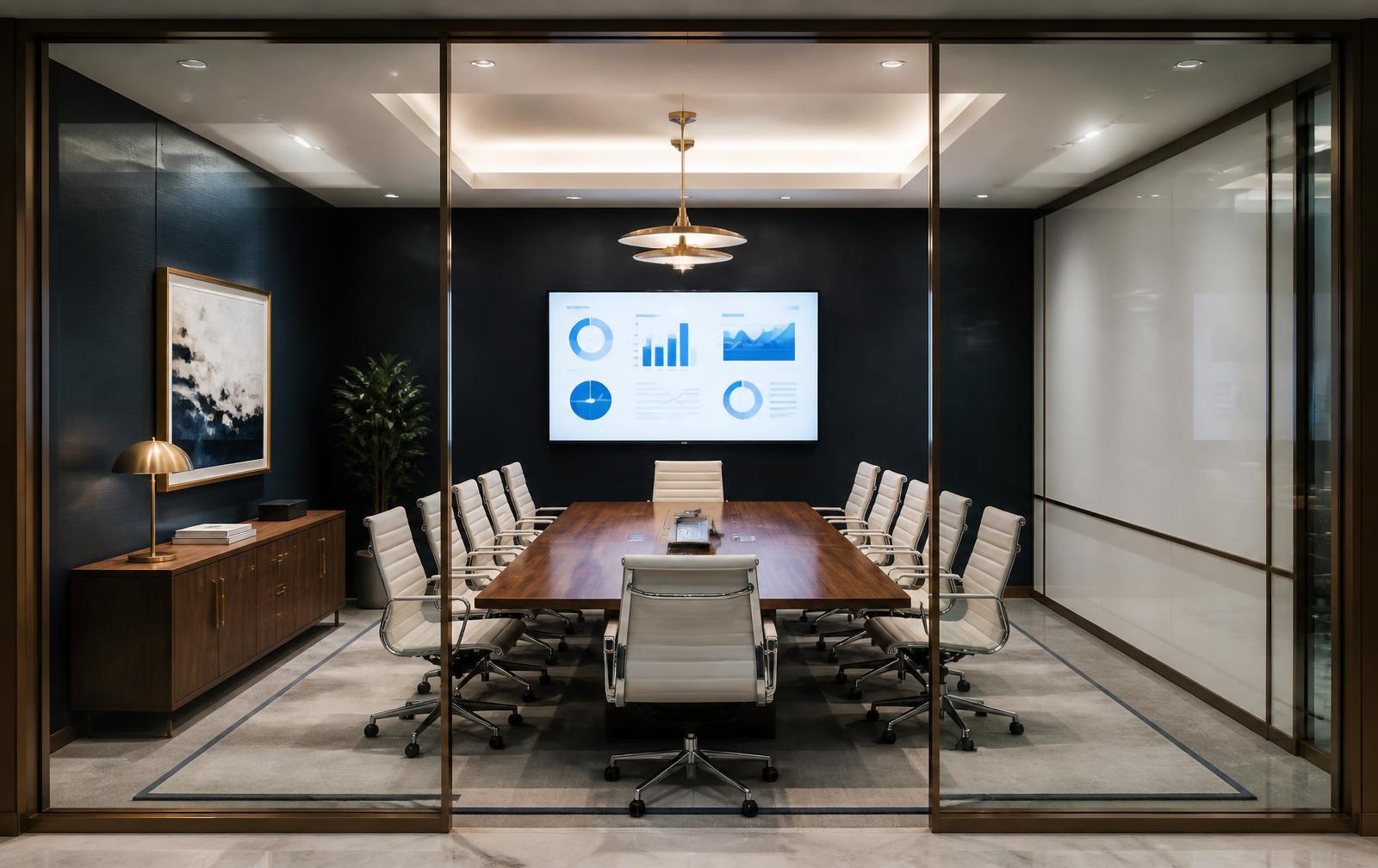
Interactive visualization of the cloaking effect — display compatibility and real-world viewing conditions vary. Test the specific display before specification.
What Casper actually does
Clear glass stays clear. A glass-walled conference room keeps the daylight, the sightlines and the open feel that the architecture was designed for — and the content on a compatible digital display inside it is obscured to people on the other side of the glass. Casper works by itself; it does not need a second film to cloak displays, though decorative or privacy films can be combined where that suits the space.
- 1
A large compatible display inside the room
Designtex lists Casper as compatible with most 40-inch-plus-wide LED displays common in offices — computer monitors, televisions and video walls.
- 2
Casper film on the room-side glass
Designtex guidance is to install Casper on the inside of the room containing the display, with nothing interfering between the display light and the film.
- 3
Outside the glass, the screen is cloaked
People outside still see into the room through clear glass. The content on a compatible display is obscured from that outside view.
Casper is available with a slight tint of less than 5%, and cloaking is strongest when the glass is viewed fairly directly. Designtex notes that opacity can reduce somewhat at extreme angles and close viewing conditions, so we plan around the sightlines that actually matter in your space rather than promising a single universal result.
Where it makes sense
Anywhere a large display sits behind interior glass and the screen is the thing you'd rather people outside didn't read. Casper addresses display visibility — it is not an acoustic treatment and it does not hide people or objects in the room.
Glass conference rooms & boardrooms
Keep a glass-walled meeting room feeling open while what's on the presentation display stays out of view from the corridor.
Executive offices
Glass-fronted executive suites where the display faces an open floor plan or a shared circulation path.
Healthcare & clinical meeting spaces
Rooms with large displays used for case review or scheduling, where the glass wall faces a public corridor.
Financial, legal & HR environments
Meeting rooms where the screen carries sensitive material and the room itself needs to stay visible for supervision.
Research & engineering collaboration rooms
Team rooms and war rooms with wall displays or video walls behind interior glazing.
Education & institutional presentation rooms
Presentation and administration rooms in schools, universities and institutions with large-format displays behind glass.
Display compatibility comes first
This is the part of a Casper project that decides everything else. Casper is directional, and whether a screen cloaks depends on how that display is actually assembled — not just on its brand or size. That is why Designtex's own best practice is to test the exact display with a Casper sample before it is specified or installed, and why we do the same before quoting a project.
Validate My DisplayIntended zone
- Most 40-inch-plus-wide LED displays commonly used in offices
- Computer monitors, televisions and video walls in that size range
- Clear, smooth architectural-grade glass, new or existing
Inconsistent or unsupported
- Displays under 40 inches may not cloak, may partially cloak, or may cloak in different directions
- Analog and projector technologies are not supported
- Older display types such as CRT and plasma are not supported
- Most touchscreens, phone screens and smaller devices are not the intended use
Casper vs. frosted film vs. smart film
These three products solve different problems. None of them is universally better — the right one depends on whether you need to hide the screen, the room, or both on demand.
Casper® Cloaking Technology
The room stays visible, the screen doesn't
- Glass stays clear — you can still see into and out of the room
- Obscures content on compatible digital displays from outside view
- Passive film — the film itself needs no power or switching
- Display compatibility must be tested before it is specified
Frosted / decorative privacy film
Obscures the whole view through the glass
- Permanently translucent — the entire treated pane is obscured
- Hides the room, the people and the screen alike
- No electrical work, no switching, no display constraints
- Best when whole-room visual privacy is the goal
PDLC smart film
Switches the whole pane clear or private
- Electrically switches the treated glass between clear and frosted
- Whole pane changes state — not just the screen
- Requires a powered system and electrical planning
- Best when a room needs on-demand privacy for the entire opening
Casper cloaking film cost
There is no honest single price for a Casper project, because two glass walls of the same size can take very different amounts of material and labor. We confirm project pricing after field measurements and a compatibility test on your actual display — not from a form and not from a per-foot number that ignores the room.
Request a Casper ConsultationWhat moves the number
- Square footage of glass actually treated
- Number of panes and the panel layout of the glass wall
- Installation access — occupied space, height, furniture, after-hours work
- Whether a decorative or privacy companion film is added to the same glass
- Display validation — testing the specific display with a Casper sample
- Site location and mobilization for the project
Installation & planning
Casper needs product-specific knowledge, which is why professional installation is recommended. Here is how a project runs.
- Step 1
Review the room and the objective
We look at the glass wall, where the display sits, and which sightlines actually matter — corridor, lobby, open floor.
- Step 2
Validate the exact display
Casper is directional and compatibility depends on how the display is assembled. Best practice is to test the specific display with a Casper sample before it is specified.
- Step 3
Measure glass and panel layout
Casper is supplied 48 inches wide, so pane sizes and mullion layout determine how the material is planned across the wall.
- Step 4
Professional wet-apply installation
Casper is a wet application using mounting solution and a squeegee, installed on the correct room-side glass surface per manufacturer guidance.
- Step 5
Cure and final viewing check
The adhesive cures over several days. We walk the sightlines afterward to confirm the result from the angles that matter to you.
Glass orientation matters. We follow Designtex guidance on which surface the film goes on and keep exterior-facing glazing conditions in scope during the survey rather than improvising on site. After installation, normal surface-cleaning protocols apply, and the film can be removed later if the room changes use.
Casper Cloaking Film FAQ
Straight answers using Designtex's published product guidance.
Want to know if Casper will work on your room?
Send us the glass dimensions, a couple of photos and the make, model and size of the display. We'll arrange a compatibility test before anything is specified.
Casper® Cloaking Technology is a product of Designtex; Decorative Films is the exclusive distributor according to Designtex. Shore Tint & More plans and installs Casper for Delaware and Delmarva projects.