Builder & inspector resource / Delaware
Delaware Window Tempering & Safety Glazing Retrofit
Guidance and documentation for safety-glazing film retrofits on qualifying existing openings. Review the opening, manufacturer documents and treatment identification with your building inspector.
Inspector DocumentsOfficial code, 3M technical specifications and applicable warranty documentation.
01 / The opening review
An opening review, not automatic approval
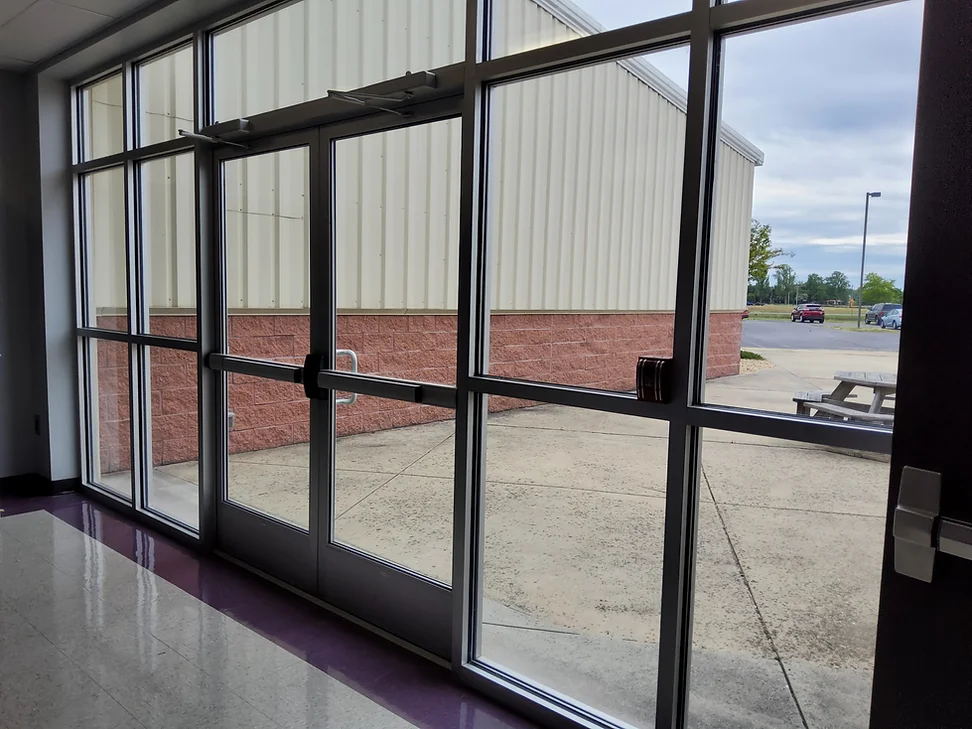
For punch-list corrections, renovations and existing door-adjacent glazing, start with the inspector’s concern and the actual opening. A safety-film retrofit may be a candidate only where the documented glass-and-film configuration suits the location and the inspector or authority having jurisdiction accepts it.
Film does not thermally temper glass. Interior S40, exterior-capable S40X or a dual-surface configuration must be selected for the actual application; both sides are not universally required. A film name or component properties table does not establish compliance for every hazardous opening.
Inspector & Builder Documents
Official state code and 3M manufacturer documentation. All links open in a new tab.
3M Safety S40 Technical Specifications · Rev C, January 2025
Application-specific safety testing, film properties and installation requirements. A component table is not universal opening compliance.
Delaware Code — Title 16, Chapter 86 (Safety Glazing)
The state statute defining safety glazing materials, hazardous locations, and permanent labeling requirements.
3M Safety Series S40 — Manufacturer Technical Data
Official 3M literature for the clear 4 mil interior safety/security film used in most retrofits.
3M Exterior Safety S40X — Manufacturer Technical Data
Official 3M literature for the clear 4 mil exterior-capable safety film family.
3M Window Films Flat Glass Warranty Bulletin — March 1, 2026
Current 3M warranty matrix, including registration requirements, exclusions, and coverage terms.
3M Safety Glazing Segment Card
How safety film helps glass meet safety-glazing requirements in schools and public buildings.
Delaware Safety Glazing Code — Title 16, Chapter 86
Delaware's safety glazing statute defines safety glazing material by the current ANSI Z97.1 test requirements in force, together with any further requirements imposed by the inspecting authority. Glazing installed in a hazardous location must be safety glazing material.
§ 8602 requires a permanent, visible label on safety glazing material identifying the labeler (manufacturer, fabricator, or installer), the nominal thickness, the type of safety glazing material, and compliance with the applicable ANSI Z97.1 test requirements. Label placement and content must satisfy the project and the authority having jurisdiction.
This is a plain-language summary for convenience — read the statute itself for the controlling language.
How a Safety-Glazing Retrofit Works
From flagged glass to the inspector's final determination.
- 1
Review the opening
Identify the inspector’s concern, location, glass type and frame conditions. Not every hazardous opening is a candidate for a film retrofit.
- 2
Match manufacturer documentation
Review the proposed glass-and-film configuration, application surface and applicable safety-testing documents. Film does not thermally temper glass; S40, S40X and dual-surface configurations are application-specific.
- 3
Identify the treatment
Record the installed treatment and required permanent label information. Shore’s QR label links to /tempering for documents; the QR code alone is not certification or proof that every statutory labeling requirement has been met.
- 4
Inspector determines acceptance
The inspector or authority having jurisdiction reviews the actual opening, manufacturer records and required labeling before making the acceptance determination. A product name or QR scan does not guarantee approval.
3M Safety Series S40 — Technical Data
Nominal component properties do not establish compliance for every opening. Consult the S40 technical specification and the inspector for the proposed glass-and-film configuration.
- Construction
- Clear single-ply polyester safety/security film
- Nominal thickness
- 4 mil / 0.10 mm
- Tensile strength
- 25,000 psi / 172 MPa
- Break strength
- 100 lb/in / 445 N per 25 mm
- Elongation at break
- Greater than 125%
- Peel adhesion
- Greater than 4 lb/in / 18 N per 25 mm
- Abrasion resistance
- Less than 5% haze increase
- Application surface
- Interior glass surface
- UV rejection
- Up to 99%
- Safety testing
- 3M lists ANSI Z97.1 testing; match the documented glass/film configuration
3M Exterior Safety S40X
3M Exterior Safety S40X is a clear 4 mil exterior-capable safety film for exterior-facing applications where an interior installation is not appropriate. 3M lists ANSI Z97.1 performance testing for the exterior safety family.
Whether an opening calls for interior S40, exterior S40X, or a dual-surface configuration is determined during the on-site verification — it is application-specific.
Current 3M Warranty Coverage
Per the official 3M Window Films and 3M IPA for Flat Glass Applications Warranty Bulletin dated March 1, 2026:
- Safety S40 — residential: performance warranty for the lifetime the original purchaser owns and occupies the residence.
- Safety S40 — commercial: 10-year performance warranty.
- Exterior Safety S40X: 7 years vertical / 5 years sloped performance warranty, with 1 year of labor in the current matrix.
- Glass breakage & seal failure: coverage is subject to eligibility and the terms in the bulletin.
Review the current bulletin for registration requirements, exclusions, and exact coverage. A QR label does not create warranty coverage.
Open the 3M Warranty BulletinThe Shore Treatment Identification Label
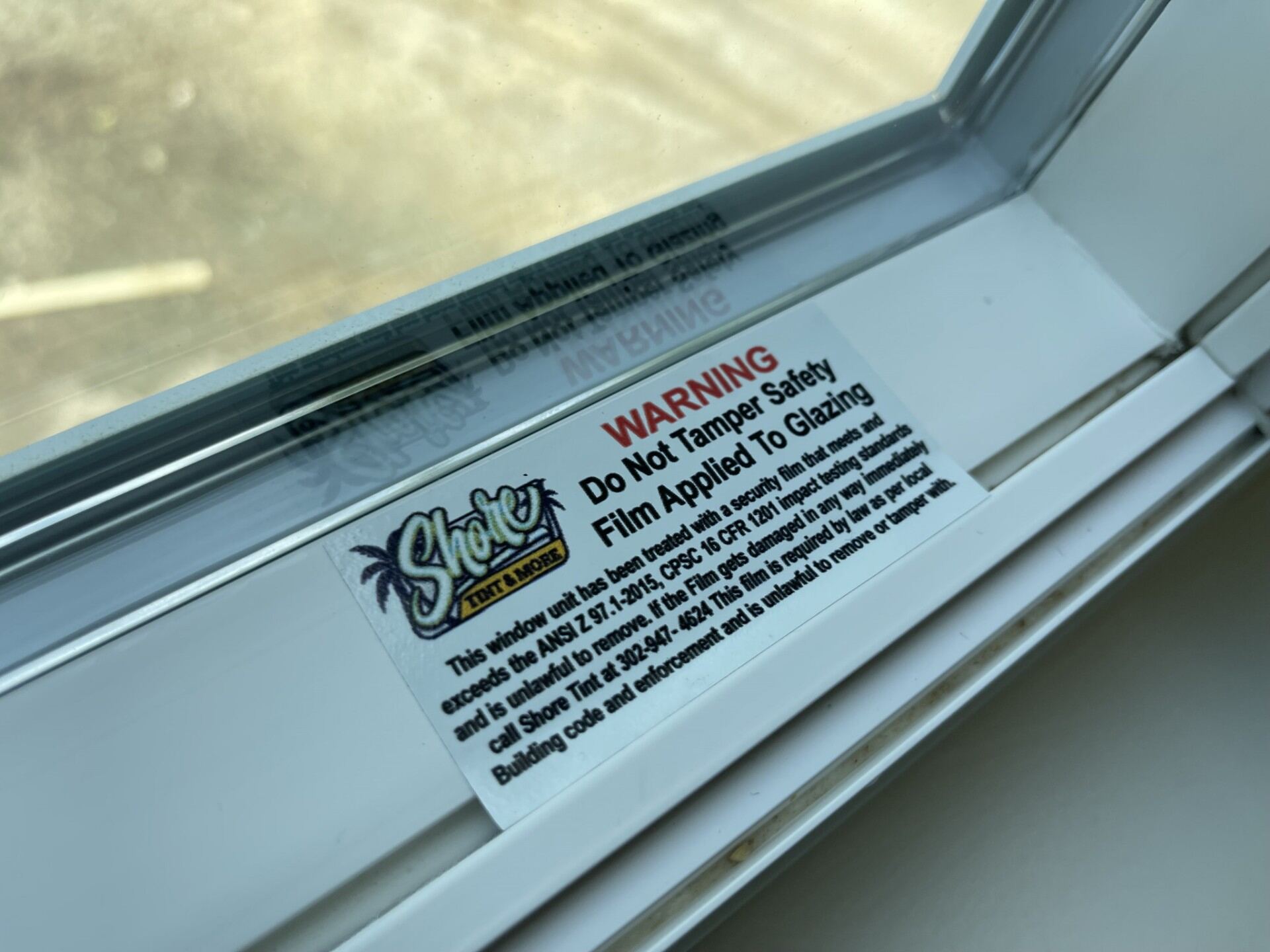
After a qualifying installation, each treated pane receives a permanent, visible Shore Tint & More label. The label identifies the treated glazing and gives inspectors immediate access to the supporting state code and 3M manufacturer documentation.
The QR code on the label resolves to this page, /tempering. Label content and placement must satisfy the project and the AHJ; the label alone does not guarantee statutory compliance or inspection approval.
Request Tempering Retrofit QuoteFor Delaware Home Builders & Contractors
We work directly with builders across Delaware when glazing gets flagged — and we tell you straight when a film retrofit is not the right correction for an opening.
Punch-list & failed-inspection corrections
Review the flagged opening and inspection requirements before deciding whether a documented film retrofit is an appropriate correction.
New construction & renovation
Coordinated with your trades on new homes, remodels, and light commercial projects.
Statewide Delaware scheduling
New Castle, Kent, and Sussex counties, plus the Maryland Eastern Shore.
Avoid full unit replacement
Where a qualifying retrofit is appropriate for the opening, film avoids replacing the whole window unit. Film is not a fit for every hazardous location.
Window Tempering & Safety Glazing FAQ
For Delaware inspectors, builders, and homeowners
This page is provided for reference. A safety-glazing film retrofit applies only where the specific film and glass assembly suits the opening. Shore Tint & More does not guarantee inspection approval — final acceptance is made by the building inspector or authority having jurisdiction. Product performance and warranty terms are governed by 3M's current published documentation.
02 / The opening review
The builder’s documentation checklist
Keep the opening’s location and glass identification, proposed film and application surface, relevant manufacturer safety-testing documentation, treatment record, required label information and inspector correspondence together. Record the accepted configuration rather than relying on a product family card alone.
Delaware §§8601–8602 tie safety glazing to the applicable ANSI Z97.1 test requirements and inspecting-authority requirements. The permanent label must be legible and visible after installation and identify the labeler, nominal thickness, type of safety glazing material and applicable compliance. A Shore QR label is an access point to documents, not independent certification or automatic statutory approval.
Related specifications & guidance
Next step
Review the opening before choosing the correction.
Shore documents the proposed glazing treatment. Your inspector or authority having jurisdiction determines acceptance.