Entrance glazing / Delaware & the Mid-Atlantic
Forced-entry protection starts with the opening.
Doors, sidelites and fixed glazing deserve an opening-by-opening review—not a promise based on film thickness alone.
A contractor glazing survey. For Delaware K–12 independent assessment, start with DSSC’s school safety assessment.
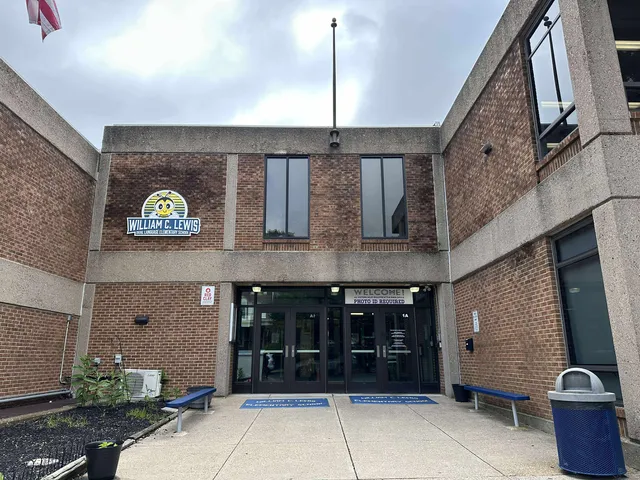
Red Clay: a scoped district program
About 6,000 sq ft of window film across 14 Red Clay schools. C-Bond treatment was reserved for prioritized openings—not a district-wide ballistic rating.
C-Bond ballistic resistance depends on the exact tested glass, treatment, film layers and installation configuration.
See the Red Clay school project01 / Reviewing your glass and frames
Review the entrance as a set of openings
The entry door, adjacent sidelites and transom may have different glass and frame conditions. Record them separately rather than treating the entire entrance as one square-footage allowance. Fixed glass and moving door leaves also need different access and operating considerations.
Film can help hold fractured glass together. A compatible specified perimeter connection can help retain the filmed pane in its frame, but the assembly can still fail. It does not make the opening impenetrable or guarantee an attacker’s delay or a response time.
Conceptual opening map · not a tested assembly
02 / Reviewing your glass and frames
Four parts of a specified system
Glass: identify annealed, tempered, laminated or insulated construction and the condition of each lite. Film: select a product for the documented objective, not thickness alone. Attachment: confirm the manufacturer-required connection and compatible bonding surfaces. Frame: check material, profile, glazing bite and condition before promising an attachment solution.
S800 requires 3M IPA for break-entry, windstorm, explosion mitigation and spontaneous breakage on single-pane tempered glass. Its explosion scope is commercial and non-educational government facilities, not schools. S2400’s US product page requires IPA for all applications; do not combine PET film with S2400 on the same pane.
Glass
Type, construction and condition of each lite.
Film
Product matched to the documented objective.
Attachment
Required connection and suitable bonding surface.
Frame
Material, profile and condition of the perimeter.
03 / Reviewing your glass and frames
Survey priorities and installation phasing
Bring the owner-approved opening priorities, building access windows and any existing glass or frame records. Sensitive safety plans belong in owner-controlled channels, not a public inquiry. Shore can then separate film, perimeter attachment, access and documentation in the written scope.
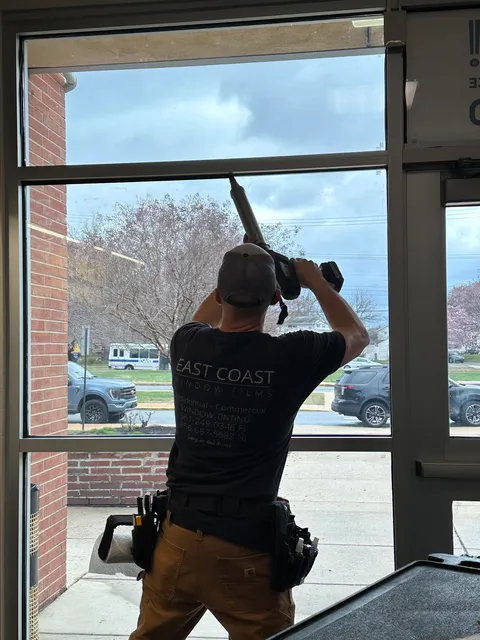
Agree how entrances remain usable, how adjacent finishes and occupied areas are protected, and how work is phased around building operations. Cleaning, film installation, attachment preparation and curing follow the selected manufacturer’s instructions; completion of application is not the same as completion of curing.
04 / Reviewing your glass and frames
A closeout the facilities team can use
Retain the opening schedule, installed product and attachment identification, relevant test reports, care and curing guidance, applicable warranty documents and the acceptance record. The documentation should describe the actual installation, not transfer a test rating from a different glass build-up.
Review locks, hinges, access control and response procedures separately with the responsible team. A glazing retrofit supports those layers; it does not replace them.
Seaford’s attachment scope
The district project included 500 sq ft of security film and approximately 480 linear feet of 3M Impact Protection Attachment. Square footage alone would not describe that scope.
See the Seaford projectManufacturer documents
Reviewed November 6, 2026. Manufacturer requirements apply to the specified product, glass and installation.
Frequently Asked Questions
Next step
Review your glass, film and frame together.
Start with the openings and the objective. Shore will document the glazing scope and the applicable installation requirements.