Micro-layer PET
Adhesive
Existing glass
8 mil nominal
3M Ultra S800
Co-extruded micro-layer PET
Fragment retention and a specified forced-entry delay objective
Shore Tint & More · Delaware & Eastern Shore
A clear upgrade for vulnerable glass. Explore 3M film, frame attachment and qualifying system options for entrances, classrooms, storefronts and homes. Shore scopes the right assembly opening by opening.
Family-owned since 1989 · 3M Authorized Window Film Dealer
01 / Reviewing your glass and frames
Fragment retention, forced-entry delay and ballistic-system review are different specification questions. Begin with the owner’s priorities and the openings involved, then ask which documented glass, film and frame configuration addresses that objective.
A thicker film is not automatically a higher-performing opening. Nominal mil thickness describes a material; a test report describes a particular assembly under particular conditions. Ordinary 3M security film and a qualifying C-Bond ballistic-resistant system are separate choices, not steps on a universal strength scale.
Four different specification paths
From clear safety film to an engineered assembly, start with the openings that matter and review the right film, attachment and installation for your glass and frame.
8 mil nominal
Co-extruded micro-layer PET
Fragment retention and a specified forced-entry delay objective
14 mil nominal
Three-ply polyester
Clear safety film with security applications when properly specified
24 mil nominal film (25 mil including adhesive)
Polyurethane / TPU
Optically clear retention in a specified security assembly
Configuration-specific multilayer system
C-Bond treatment + proprietary multilayer film on qualifying glass
Ballistic-resistant system review for a qualifying assembly
| Criterion | 3M Ultra S800 | 3M Safety S140 (S14) | 3M Scotchshield S2400 | C-Bond BRS |
|---|---|---|---|---|
| Construction | Co-extruded micro-layer PET | Three-ply polyester | Polyurethane / TPU | C-Bond treatment + proprietary multilayer film on qualifying glass |
| Film thickness | 8 mil nominal | 14 mil nominal | 24 mil nominal film (25 mil including adhesive) | Configuration-specific multilayer system |
| Glass retention | On specified glass | On specified glass | On specified glass | Qualifying assembly only |
| Forced-entry objective | With matching film + IPA configuration | With matching film + IPA configuration | With matching film + IPA configuration | Only if supported by separate report |
| Ballistic qualification | Not bullet-resistant | Not bullet-resistant | Not bullet-resistant | Only the exact qualifying tested system |
| Attachment / assembly | 3M IPA required for break-entry, windstorm, explosion and spontaneous single-pane tempered breakage applications. | 3M IPA required for all break-and-entry applications and, separately, spontaneous breakage on single-pane tempered glass. | Follow current 3M IPA requirements for the exact application; 3M's product page specifies IPA for all applications. | Exact glass, treatment, film layers and installation must match the qualifying report. |
| Application limits | Published results belong to tested glass, film and attachment configurations. S800 explosion applications are limited by 3M to commercial and non-educational government facilities, not schools. | Film alone does not qualify an opening for forced-entry delay. | Do not combine PET film with S2400 on the same pane; follow current 3M specifications. | Separate manufacturer; not a 3M film or a universal retrofit rating. |
| Documentation | 3M Ultra S800 Technical Specifications · Rev G, January 2025 | 3M Safety S140 Technical Specifications · Rev D, January 2025 | 3M S2400 Technical Specifications · Rev D, July 2026 | C-Bond BRS manufacturer performance sheet |
Thickness is a material dimension, not a security rating. Scale begins at zero; C-Bond is a configuration-specific system and is not plotted.
An illustrated cross-section
Select a condition to see what the film and attachment each contribute. This illustration is educational, not a simulation or evidence of tested performance.
If untreated glass breaks, loose fragments can fall away and leave an opening. This schematic does not predict how your glass will break.
Start with the opening
Identify the building and the objective. We will still need to inspect the glass, frames and access before specifying a system.
Select your building and objective to prepare a glazing survey brief.
The survey will cover glass type, frame condition, exposed doors and sidelites, and whether attachment is required.
Continue to Glazing SurveyYour brief follows you to the estimate page, where you can copy it into your message.
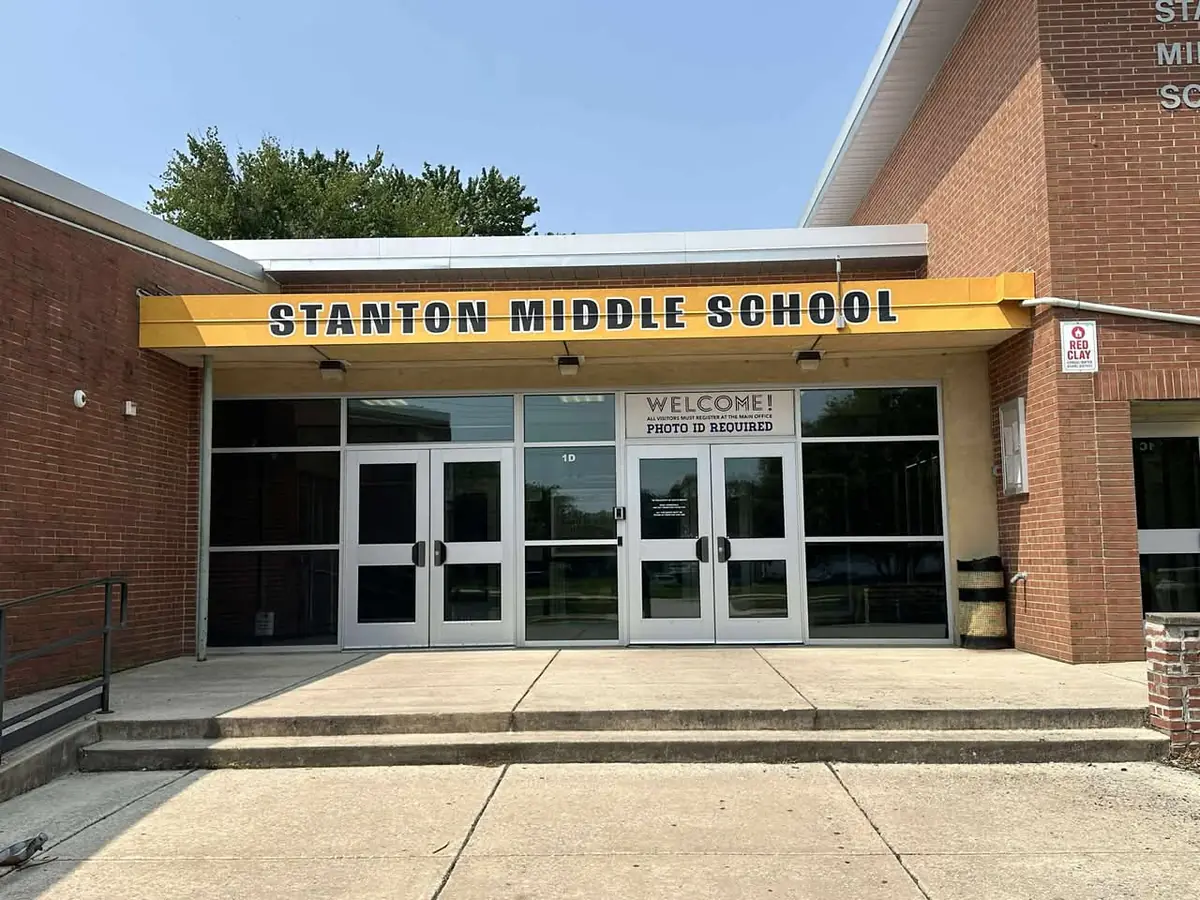
Explore window-film projects on Delaware school buildings, with the glazing scope and project details for each site.
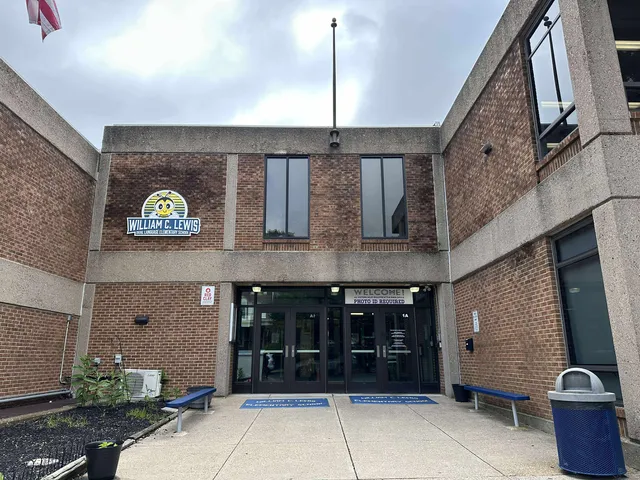
About 6,000 sq ft of window film across 14 schools; C-Bond at prioritized openings only.
William C. Lewis Dual Language Elementary School entrance with security window film in Wilmington, Delaware
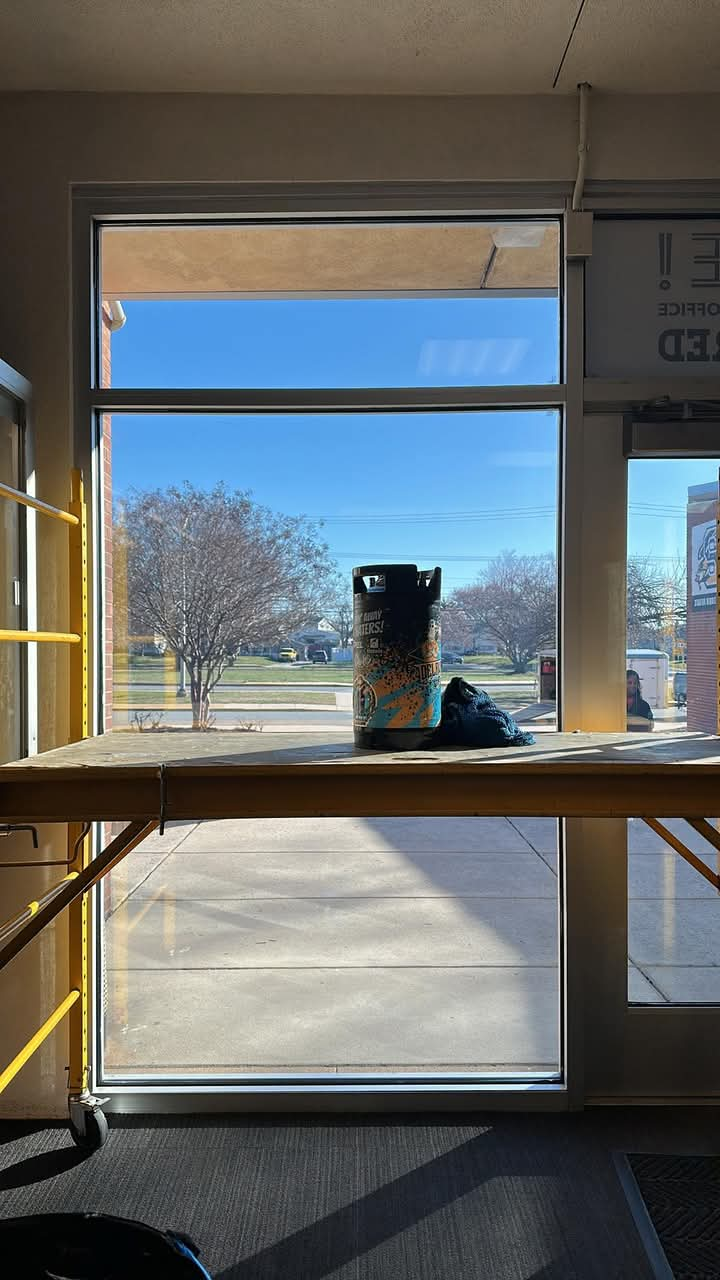
500 sq ft of security film and approximately 480 linear feet of 3M Impact Protection Attachment. These are installed quantities, not a measured entry-delay result or ballistic rating.
Before: school storefront lites — glass staged for film and attachment
Review glass, frames, doors and sidelites.
Match the objective to a compatible, documented configuration.
Quote film, attachment, access and phasing opening by opening.
Complete installation, curing guidance and documentation.
Explore storefronts, school entrances, faith-based facilities and home entry glazing.
What a site survey and specification can establish
Published test data applies only to its specified configuration. Request current documentation for the actual proposed assembly.
02 / Reviewing your glass and frames
Look for an opening schedule, identified glass and film, frame condition, attachment requirement, access and phasing, and the current supporting manufacturer documents. Ask which tested configuration is being proposed and where your existing opening differs.
Keep door hardware, alarms, staff procedures and response planning with the appropriate owner and qualified trades. Shore documents the glazing portion. A glazing survey is not an independent facility security assessment.
The owner or design team defines opening priorities and acceptance requirements; Shore reviews existing glass and frames, proposes the film-and-attachment scope and coordinates installation access. Include removal, preparation, occupied-area protection, phasing and the selected manufacturer's curing instructions in pricing. Keep product identification, applicable warranty and care documents in the closeout record.
Next step
Use the comparison to frame your questions, then document the actual glass, film, attachment and frame in a Shore glazing survey.