Rain Glass Window Film: The SOLYX Look, Installed in an Afternoon
A Delaware installer's guide to SOLYX rain glass window film — how the rippled texture works, where it belongs, what it costs versus replacing glass, and photos from a real Sussex County install.
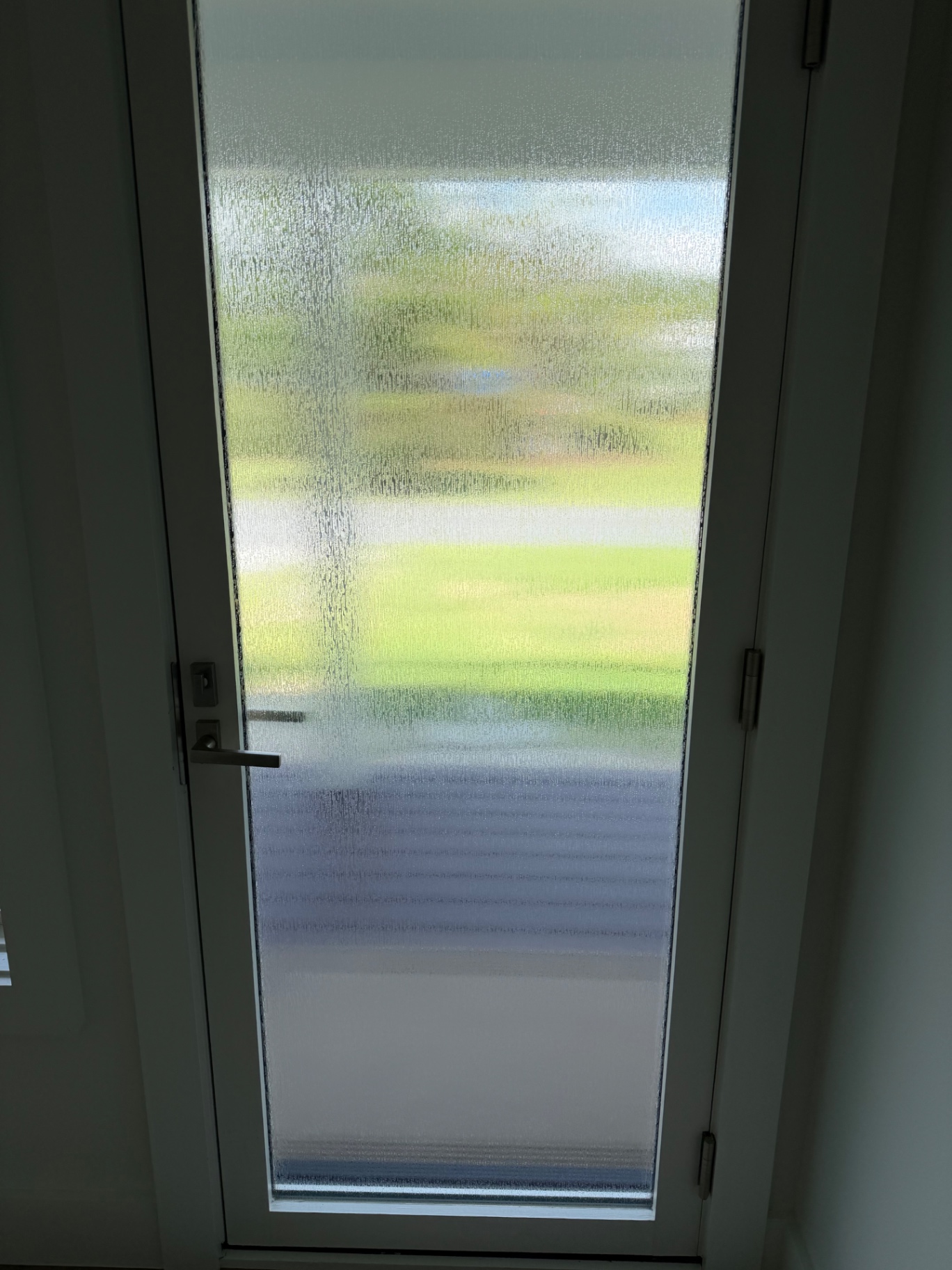
Rain glass is one of those finishes people notice before they know what to call it. Vertical ripples running down the pane, daylight pouring through, and absolutely no way to see who is standing on the other side. It shows up in coastal builds, spa bathrooms, and modern entry doors — and until recently the only way to get it was to order cast rain glass from a glass shop and wait weeks for it.
There is a second way, and it is the one we install most often: SOLYX rain glass window film, applied directly to the glass you already own.
What rain glass film actually is
Rain glass film is a decorative polyester film with a molded texture pressed into its surface. It is not a print of a texture — the ripple is physically formed in the film, which is why it refracts light the same way cast glass does instead of looking like a sticker under raking sun.
The film is adhesive-backed and installed wet, exactly like a privacy or safety film. Once it cures, the glass reads as one piece. Run your hand over it and you feel the ripple. Stand two feet back and you cannot tell it was not manufactured that way.
Key specs we quote most often:
- Privacy level: obscures shapes and detail completely at normal viewing distance; silhouettes remain visible in strong backlight
- Light transmission: high — rooms stay bright, which is the entire point
- Adhesive: pressure-sensitive, removable by a professional without damaging the glass
- Where it goes: interior surface of the glass, so it is protected from weather and impact
- Lifespan: interior applications routinely run 10+ years
Why homeowners pick the film over real cast glass
We are not going to pretend film is the answer to every situation. But for the majority of doors and windows people ask us about, the math is not close.
Cost. Replacing an insulated door lite or a sidelight with factory cast rain glass usually means a new sash or a new door unit. Film handles the same opening for a fraction of that.
Lead time. Special-order obscure glass is a multi-week wait, and it always seems to arrive after the house is otherwise finished. We measure, cut, and install film in a single visit — most doors and sidelights are done in under two hours.
Reversibility. Tastes change and houses get sold. A film can be professionally removed and the original clear glass is right there underneath. A replaced pane is permanent.
Warranty safety. On newer insulated units, swapping glass can put the manufacturer's seal warranty at risk. Interior film does not touch the seal.
A real install: entry door and sidelight in coastal Sussex County
The photos in this post are from a recent job on a newly finished coastal home. The homeowners had a beautiful full-lite door and a bedroom that opened straight onto the front walk. Clear glass, great light, zero privacy — the classic tradeoff.
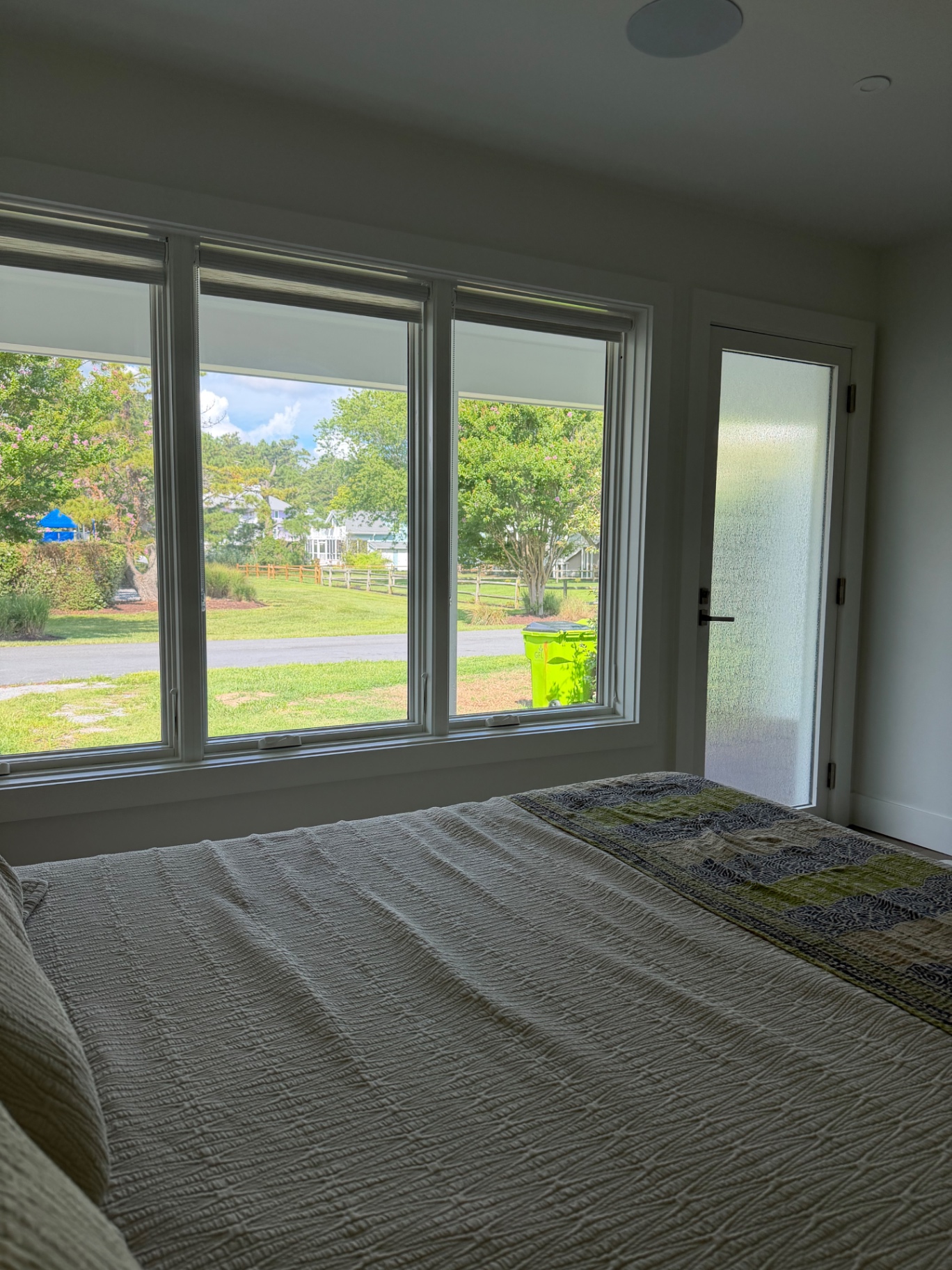
Notice what we did not do: the picture windows stayed clear. That is the part people get wrong when they buy a roll of film online and cover everything. The view of the yard is an asset. The door is the exposure. Film belongs on the exposure.
From the inside, the room still reads bright and open. From the porch, the door is a soft wash of texture with no readable detail behind it.
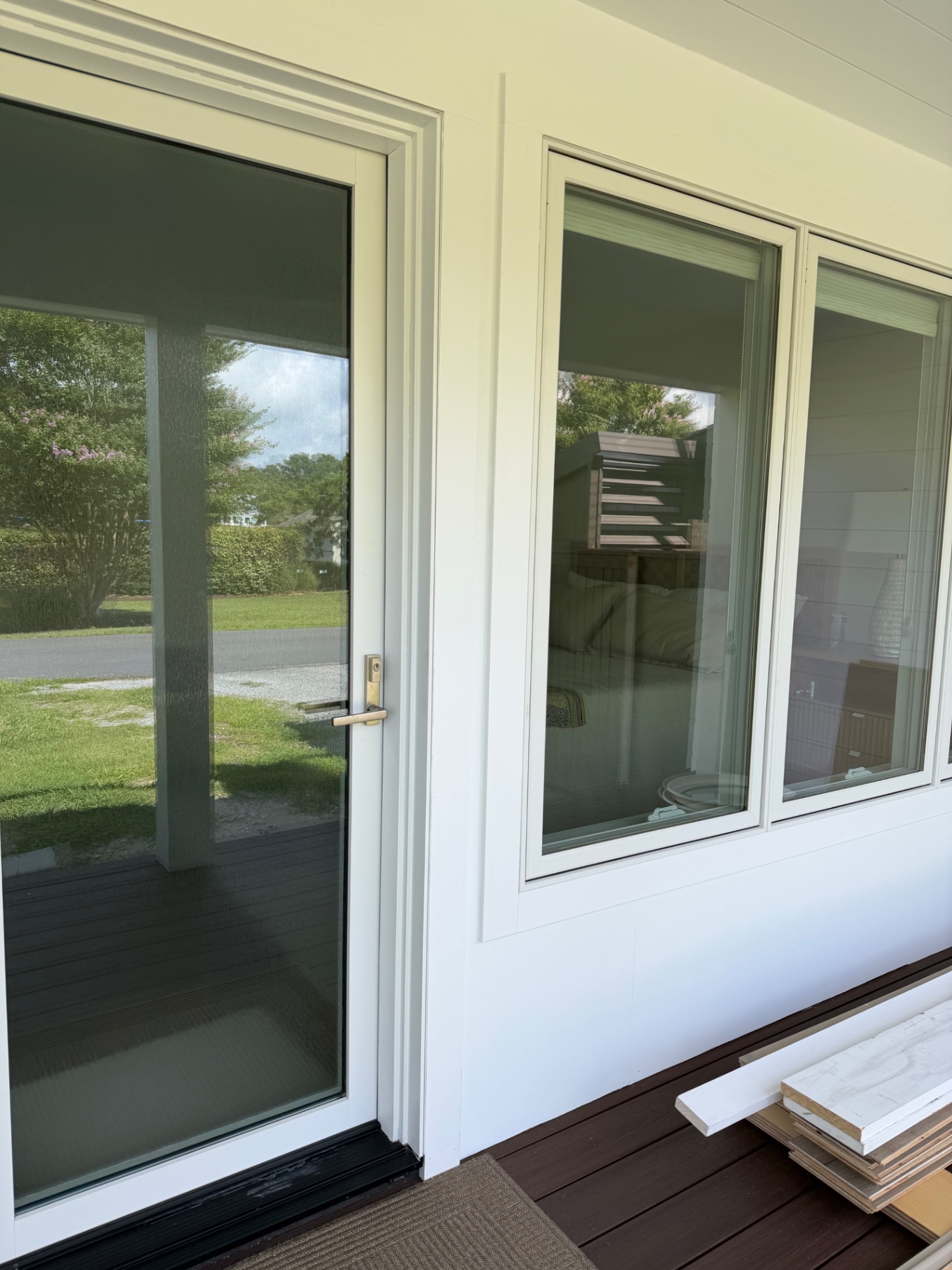
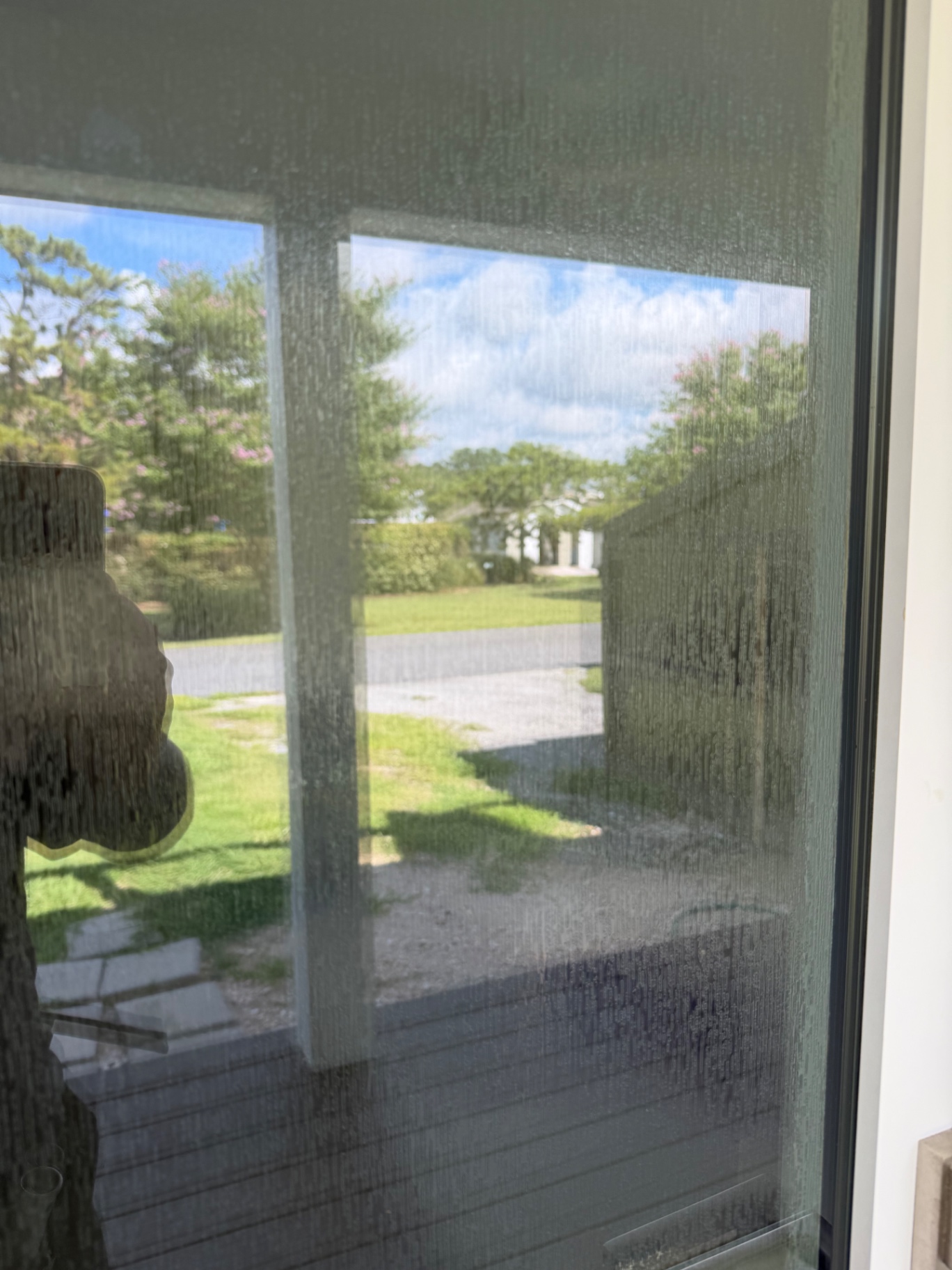
Up close you can see how the ripple behaves. Sky, grass, and pavement all stay recognizable as bands of color — the eye reads "outside" — while any actual shape dissolves.
Where rain glass film belongs
After twenty-plus years of installs, these are the openings we recommend it for most:
- Entry doors, sidelights, and transoms. The highest-value application. You gain privacy at the front door without giving up the daylight that makes an entry feel welcoming.
- Bathrooms and ensuites. Rain glass reads more like a design choice than a frosted "privacy fix," which matters in a nicely finished bath.
- Bedroom doors on the street side. Common in coastal builds where a bedroom opens onto a porch or walkway.
- Interior office glass and conference rooms. Commercial clients like it because it softens a glass box without making it feel closed off.
- Stairwell and hallway windows facing a neighboring property line.
Where we usually steer people away: large view windows you actually enjoy looking through, and any glass where you need to see who is approaching for security reasons.
Rain glass vs. frosted film vs. blinds
Frosted film gives you the same privacy but a flat, uniform look. It is the right call when you want the glass to disappear. Rain glass is the right call when you want the glass to be a feature.
Blinds and shades on a door are a maintenance item — they bang, they tangle, they get pulled down. Film has no moving parts and never needs adjusting.
Textured or gradient films sit between the two. We bring samples so you can hold each one against your own glass in your own light, which is the only reliable way to choose.
What it costs and how we quote it
Pricing depends on the size and shape of the openings and how much of the glass is accessible. A single door lite is a small, fast job. A run of sidelights, transoms, and a matching bathroom window is a half day. We measure everything on site, quote a fixed price, and there is no charge for the consultation.
If you want a rough number before we come out, send us photos of the openings with a tape measure in frame and we can usually get you close over the phone.
Installation: what to expect
- We protect flooring and surrounding trim before anything gets wet.
- The glass is deep-cleaned and scraped — 90% of a good film job is glass prep. Any contamination left behind shows up forever.
- The film is cut oversized, applied wet, squeegeed out, then trimmed to the edge of the daylight opening.
- The film hazes slightly while the mounting solution evaporates. That clears on its own within a few days to a couple of weeks depending on temperature.
- Do not clean the glass for 30 days. After that, any non-ammonia glass cleaner and a soft cloth is fine.
Get rain glass on your door
Shore Tint & More has been installing window film across Sussex County and Delaware since 1989. We are a 3M Authorized Dealer and IWFA accredited, and we install decorative films like SOLYX rain glass on doors, baths, and offices from Lewes and Rehoboth Beach to Wilmington.
Bring us the opening you have been meaning to fix. We will bring the samples.
Call (302) 947-4624 or request a free estimate — we will tell you honestly whether film or glass is the right answer for your project.
Related Service:
Learn more about Residential Decorative FilmReady to Transform Your Space?
Contact us today for a free consultation and estimate.
Get a Free Estimate