Exterior Window Film for Gyms: Controlling Glare and Solar Heat
How exterior sun-control window film helps gyms and fitness centers with elevated glazing — interior vs exterior access, reflective appearance, glass compatibility, lift logistics and what to ask during an assessment.
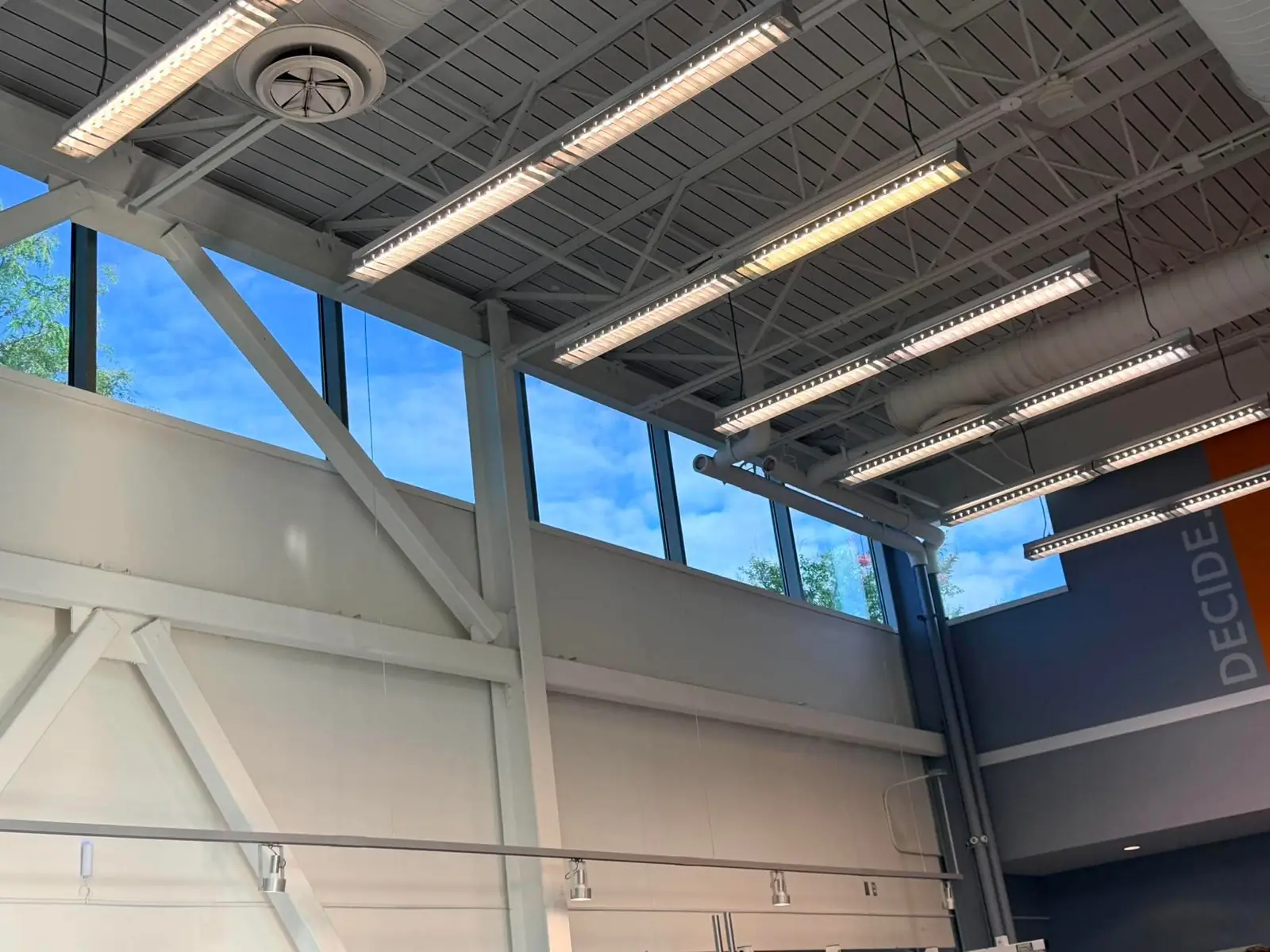
Short answer: exterior sun-control window film can be a practical option for the elevated glass in a gym or fitness center, because the film is applied to the outside of the existing glazing from a lift rather than over the equipment floor. It is not automatically the right answer for every facility: which side the film goes on, and which product is specified, must follow exact identification of the existing glass, the manufacturer's compatibility guidance, the access conditions at the building, and the warranty requirements that apply.
Fitness facilities have a glazing problem that most buildings do not. The windows that make the room feel good are almost always high on the wall, and the people underneath them are looking up, sweating, and often lying on their backs. This guide covers what owners and facility managers should evaluate before treating gym glass, and uses a completed Delaware project as a working example.
Why gym glazing behaves differently
Most commercial glare complaints come from desks and screens. In a fitness center, the complaints come from bodies and sightlines:
- Elevated clerestory bands. Gyms are frequently daylit from a strip of glass near the roofline. That glass faces open sky, so it collects diffuse brightness all day rather than a short window of direct sun.
- Upward sightlines. A member on a bench press, a rowing machine, or a mat is looking straight into the brightest surface in the room.
- Moving equipment. Treadmill consoles, mirrors, and TV screens all wash out under high-angle daylight.
- Heat where people are already hot. Solar gain near a glass wall is a comfort issue in an office. In a room where everyone is exerting themselves, it becomes the reason members stop using a whole zone of equipment.
- Access. The glass that causes the problem is exactly the glass nobody can reach from the floor.
Interior film vs exterior film
Both exist, and the choice is driven by access, glass makeup, product availability and warranty terms — not by preference, and not by a general rule that one side is better. Final film side and product selection should only be made after the existing glass is identified exactly and checked against the manufacturer's compatibility guidance.
Interior film is applied to the inside surface of the glass. It is the default for most commercial work: it is protected from weather, easier to service, and available in a wider range of products.
Exterior film is applied to the outside surface. It is specified when:
- The interior side cannot be reached practically or safely — high glazing above equipment, atriums, or fixed interior obstructions.
- Interior work would require extensive staging over equipment or fixed obstructions.
- The glazing configuration favors intercepting solar energy before it reaches the glass.
Exterior film is a real category of product, not interior film mounted backwards. It is manufactured with a weatherable hard coat and adhesive system intended for outdoor exposure, and it carries its own warranty terms that differ from interior film. If someone offers to put an interior film on the outside of your building, that is the wrong specification.
A real Delaware example: a Wilmington fitness center
At the Jewish Community Center in Wilmington, trainers and patrons were being affected by harsh glare and solar heat coming through a band of elevated gym windows above the equipment floor. Shore Tint & More treated approximately 350 square feet of that glass with 3M Sun Control Window Film Silver Exterior Series 15X, applied to the outside of the existing glazing from a boom lift. The work was completed August 25, 2026 by Jared Becker, owner of Shore Tint & More.
3M lists 15% visible light transmittance for that film and describes the exterior silver reflective series as providing solar protection and helping reduce glare and eye discomfort — see the official 3M product page. Those are manufacturer figures measured on reference glass, not measurements taken at this facility.
The facility reported a great improvement the same day. That is qualitative feedback from the client, not a measured result: no temperature, energy, glare or UV measurements were taken on this project, so none are published.
Full scope, photos and FAQs are in the case study: Exterior 3M Silver 15X window film at a Wilmington fitness center.
What reflective film actually looks like
Owners hesitate on silver film because they picture a mirrored office tower. On elevated gym glazing, the calculation is different:
- From inside, the glass is above sightlines. Members are not looking through that band at a view — they are being lit by it. Reducing its brightness is the entire objective.
- From outside, the treated band reads as a consistent reflective strip near the roofline. On a large masonry or panel elevation, that usually looks intentional rather than odd, especially when the whole band is treated at once.
- Daylight still comes through. A sun-control film reduces transmitted light; it does not black the opening out. The room stays daylit.
- Uniformity matters more than darkness. A half-treated elevation looks worse than a fully treated one. Plan the scope so every lite in a visible band gets the same product.
Glass and film compatibility
This is the part that gets skipped and causes failures. Before any film is specified, the assessment should cover:
- Glass type and construction — annealed, heat-strengthened, tempered; monolithic or insulated glass unit.
- Existing coatings — a low-E or reflective coating on the glass changes what film can be applied and where.
- Thermal stress risk — absorption from film plus glass type, size, edge quality, shading patterns and orientation. Reputable manufacturers publish glass/film compatibility guidance, and a competent dealer will run your specific glass against it.
- Insulated glass unit condition and seal age — units with failed seals are a repair item, not a film substrate.
- Warranty status — film on glass can interact with an existing glazing warranty. Ask before, not after.
- Frame and gasket condition — exterior film terminates at the glass line; deteriorated glazing beads complicate the edge.
Lift access and site logistics
Exterior work on elevated glass is a lift job, and the lift drives the schedule more than the film does:
- Ground conditions. Can a boom or scissor lift reach every elevation, and will the surface carry it? Landscaping, mature trees, sidewalks, curbs and slope all matter.
- Setback and reach. Trees tight to a building are the most common reason a section has to be worked from an awkward angle.
- Work-area control. The ground zone below the lift gets coned and taped before anything goes up.
- Weather. Exterior film needs a dry, workable surface and reasonable wind for lift operation. Coastal and shoulder-season scheduling should build in float.
- Scheduling around the facility. Even though the work happens outside, agree in advance on hours, parking, and which entrances stay clear.
Checklist: what to ask during an assessment
- Which openings are actually causing complaints — and at what time of day?
- Is the interior side of that glass reachable safely, or does this need to be an exterior application?
- What is the exact glass makeup, and has it been checked against the manufacturer's film compatibility guidance?
- Is the proposed product an exterior-grade film, and what warranty applies to exterior use?
- What visible light transmittance is being proposed, and what will the room feel like at that level?
- Will the whole visible band be treated so the elevation looks uniform?
- How will access be handled — lift type, staging area, ground protection?
- What is the plan if a lite is discovered with a failed seal or damaged coating?
- Who is performing the installation, and are they an authorized dealer for the product?
- What performance data is manufacturer-published versus measured on my building? (Insist on the distinction.)
Where to go next
- Commercial glare reduction — how we approach glare complaints in occupied commercial buildings.
- Commercial energy efficiency film — solar heat control for commercial glazing.
- Window tinting in Wilmington, DE and New Castle County.
- 3M Authorized Dealer — what authorized installation and warranty coverage means.
Frequently Asked Questions
Can window film be installed on the outside of gym windows?
Yes. Exterior-grade sun control films are manufactured for outdoor application and are commonly specified when the interior side of the glass is impractical to reach. At the Wilmington fitness center project, approximately 350 sq ft of elevated glass was treated from the outside using a boom lift.
Why would a fitness center choose exterior film over interior film?
Usually access. Gym clerestory glass often sits high above an equipment floor, and reaching it from inside can require extensive staging. Applying the film from the outside keeps the lift and installation work outside the building. Exterior application is one option among several, and the choice should follow the glass identification, manufacturer compatibility guidance, access conditions and warranty requirements for that specific building.
Does silver reflective film make a gym dark?
It reduces transmitted light rather than eliminating it. The 3M Silver Exterior Series 15X used at the Wilmington project is listed by 3M at 15% visible light transmittance; daylight still reaches the floor, and the treated band no longer produces the same harsh brightness overhead.
Will exterior window film work on my glass?
That depends on the glass type, any existing coatings, unit construction and thermal stress considerations. A qualified dealer checks your specific glazing against the film manufacturer's compatibility guidance before specifying a product — this should happen during the assessment, not after the order.
How much glare or heat reduction should I expect?
Manufacturers publish performance values measured on reference glass, and those are the numbers to reference. We do not publish measured glare, heat, energy or temperature figures for a specific building unless measurements were actually taken on that building.
How long does a project like this take?
Scope and lift access drive the schedule far more than square footage. A single elevated band of a few hundred square feet with clear lift access is a short job; multiple elevations, tight landscaping or weather delays extend it. We give a schedule with the estimate.
Get an assessment
If glare or heat is affecting a gym, studio or fitness floor in Delaware or on Maryland's Eastern Shore, we will look at the actual glass, the access, and what the room needs. Request a free estimate or call (302) 947-4624.
Related Service:
Learn more about Commercial Energy EfficiencyReady to Transform Your Space?
Contact us today for a free consultation and estimate.
Get a Free Estimate