How Multilayer Ballistic Window Film Systems Work
A plain explanation of multilayer security film, C-Bond chemical between the layers, and 3M IPA perimeter attachment — how a retrofit system differs from ballistic glass, and why ballistic resistant is not bulletproof.
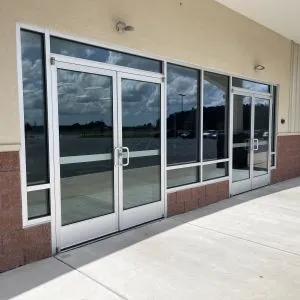
Short answer: a multilayer ballistic window film system is a retrofit assembly, not a single product. Several layers of security film are built up on the existing glass, a chemical strengthener can be applied between those layers, and a perimeter attachment anchors the glazing to its frame. "Ballistic resistant" is not "bulletproof," and any rating belongs to a complete tested assembly — not to a roll of film.
Schools, government buildings and civic facilities across Delaware are looking at their glass. Replacing every opening with ballistic glazing is rarely affordable or even physically possible in an existing building, so retrofit film systems get specified instead. This article explains, at a high level, how those systems are built and what claims are and are not defensible.
Why the glass is the weak point
Hardened doors, access control and lockdown procedure all assume the envelope holds. Ordinary annealed or tempered glass does not: once it fails, the opening is clear. A retrofit glazing system is aimed at that specific failure mode — keeping the opening obstructed after the glass has been broken.
That is the honest framing of the technology. It is about the behavior of the opening after impact, not about making glass unbreakable.
The three parts of a retrofit system
1. Multilayer security film
Standard safety and security film is a thick polyester laminate bonded to the glass with a pressure-sensitive adhesive. Its job is to hold fragments together so the broken pane stays as a sheet rather than clearing out.
A multilayer system builds up several separate film layers instead of one. More laminate mass in the opening means more energy has to be put into it to create a hole large enough to pass through. Layer count and thickness are part of the specification, and they are only meaningful when stated together with everything else in the assembly.
2. C-Bond chemical between the layers
C-Bond is a chemical treatment used with security film systems. In a multilayer configuration it is applied between the film layers so the stack is bonded as a system rather than three independent sheets sitting on top of one another. That is the role it plays in the assembly: it is part of how the layers behave as one unit.
3. Perimeter attachment (3M IPA)
The most common failure of a filmed window under attack is not the film tearing — it is the whole filmed pane leaving the frame. Film holds the glass together; nothing holds the glass in the opening.
That is what an impact protection attachment addresses. 3M Impact Protection Attachment (IPA) is a structural sealant applied around the perimeter of the treated opening, bonding the filmed glass to the window frame so the pane resists being pushed out as a unit. Perimeter attachment is what turns "the glass stayed together" into "the opening stayed blocked," and it is why linear footage of attachment appears alongside square footage of film in a real specification.
See 3M Impact Protection Attachment for the product detail and documentation we keep on file.
Film systems vs replacement ballistic glass
These are different products solving overlapping problems.
| Retrofit film system | Replacement ballistic glazing | |
|---|---|---|
| What is installed | Film layers, chemical treatment and perimeter attachment on the existing glass | New laminated ballistic glazing units, often with new framing |
| Disruption | Applied in place, typically around the facility schedule | Glass and frequently frame removal and replacement |
| Cost profile | Lower per opening; scales across a building | Substantially higher; often limited to priority openings |
| Ratings | Belong to the complete tested assembly, if such testing exists for that configuration | Products are tested and rated to published standards as manufactured units |
| Structural limits | Constrained by the existing glass and framing | Framing is designed for the glazing |
Neither replaces the other. Many real projects use a retrofit system building-wide and reserve replacement glazing for a small number of the highest-priority openings.
What "ballistic resistant" does and does not mean
This is the part that gets misrepresented in the market, so be direct about it:
- Ballistic resistant is not bulletproof. No responsible manufacturer or installer uses the word bulletproof.
- Ratings apply to complete tested assemblies. A rating is earned by a specific configuration — glass type and thickness, the exact film layers and chemical configuration, the attachment, the framing, and the installation method — tested under a defined protocol. Removing or substituting any element voids the relevance of that test.
- Applied window film systems are not designed to stop intruders on their own. They are one layer inside a security program that also includes doors, hardware, access control, cameras, procedure and response.
- Delay is situational. Performance depends on the existing glass, the specified configuration, the perimeter attachment, the framing it is anchored to, the quality of installation, and the actual threat conditions.
- If a specific project has not been tested, no rating can be claimed for it. That is true no matter what the component data sheets say.
A documented Delaware example: Milford Middle School
Shore Tint & More was awarded a $77,000 contract at Milford Middle School in Milford, Delaware, through glazing partner Walker & Laberge Glass. The scope is approximately 2,100 square feet of protected glazing — three layers of 15-mil safety and security film with C-Bond chemical applied between the film layers — plus roughly 900 linear feet of 3M Impact Protection Attachment around the perimeter of the treated openings, covering exterior and interior glazing.
Installation is underway. This is not a completed-outcome case study, and we do not publish a rating, caliber, or delay time for this project, because no such result has been tested and verified for this specific assembly.
That project page is the best illustration of how the three parts above appear in a real specification: Milford Middle School C-Bond ballistic film contract.
How to evaluate a proposal
- Ask for the full assembly, in writing — glass type, film layer count and mil thickness, chemical configuration, attachment product and linear footage, and framing condition.
- Ask what has actually been tested. If a rating is claimed, ask which standard, which lab, and which exact configuration.
- Reject bulletproof language. It is a signal about the vendor, not the product.
- Ask what the existing framing can carry. Perimeter attachment transfers load into the frame; a deteriorated frame limits the system.
- Ask about installation conditions — cure times, temperature, and how work is scheduled around occupancy.
- Ask for the manufacturer documentation for every component, not a brochure summary.
- Ask how it fits your wider plan. Glazing is one layer. Entry sequence, hardware, sightlines and procedure are the rest.
- Confirm authorized installation. Warranty coverage generally depends on it.
Documents and related pages
- C-Bond ballistic window film — system detail and the manufacturer data sheet we keep on file
- 3M Impact Protection Attachment
- School safety and security glazing
- Commercial security film
- 3M window film technical resources
Frequently Asked Questions
Is ballistic window film bulletproof?
No. "Ballistic resistant" is not "bulletproof," and we do not present it that way. Applied window film systems are not designed to stop intruders on their own, and performance depends on the complete tested assembly — the glass, the specified film and chemical configuration, the perimeter attachment, the framing, the installation, and the actual conditions.
What does the C-Bond chemical do in a multilayer system?
In a multilayer configuration, C-Bond chemical is applied between the film layers so the stack is bonded as a system rather than three independent sheets sitting on top of one another. It is part of the specified assembly, installed together with the layers.
Why is perimeter attachment necessary?
Film holds a broken pane together, but on its own it does not keep that pane in the frame. A perimeter attachment such as 3M IPA is a structural sealant that bonds the filmed glass to the frame so the whole pane resists being pushed out of the opening.
How is a film system different from ballistic glass?
A film system is a retrofit applied to existing glazing; ballistic glass is a manufactured glazing unit that replaces the existing glass and usually requires compatible framing. Retrofit systems are used to treat a whole building affordably and in place; replacement glazing is typically reserved for a limited number of priority openings.
Can you tell me what caliber a system will stop?
Not for an untested assembly. Ratings belong to specific configurations that have been tested under a defined protocol. For the Milford Middle School project we do not publish a rating, caliber or delay time, because no such result has been tested and verified for that assembly.
Is the Milford Middle School project complete?
No. The contract was awarded through Walker & Laberge Glass and installation is underway. The published details are the contract value, the approximate square footage of protected glazing, the film and chemical configuration, and the approximate linear footage of 3M IPA.
Talk to us about a facility assessment
If you are evaluating glazing security for a school, municipal building or commercial facility in Delaware or on Maryland's Eastern Shore, we will walk the openings with you and put the full assembly in writing. Request a free estimate or call (302) 947-4624.
Related Service:
Learn more about Commercial Security FilmReady to Transform Your Space?
Contact us today for a free consultation and estimate.
Get a Free Estimate